
Stop Waiting. Start Managing.
What effective leadership looks like during the work—not after it.
Most hospitals are not short on information.
They’re short on timing.
Census changes.
Acuity shifts.
Staffing decisions are made.
And only later—sometimes days later—does anyone see how those decisions actually played out.
By then, it’s over.
What This Looks Like During a Shift
It’s 10:30 AM on a nursing unit.
The team is staffed based on expected admissions.
The charge nurse is watching the board.
Admissions are supposed to come.
They don’t.
Now there’s a decision:
Do we hold staff—just in case?
Or adjust based on what’s actually happening?
At the same time, another unit is getting overwhelmed.
They need help.
But there’s no shared, real-time view across the house.
So decisions happen in isolation.
And outcomes vary.
What Leaders Are Actually Working With
Most leaders don’t see a complete picture during the day.
They see pieces:
Census.
Staffing.
Acuity—sometimes.
But not how those pieces relate to what’s expected.
So decisions are based on experience.
Or concern.
Or habit.
What Changes When You Can See the Whole Picture
Now take that same moment—
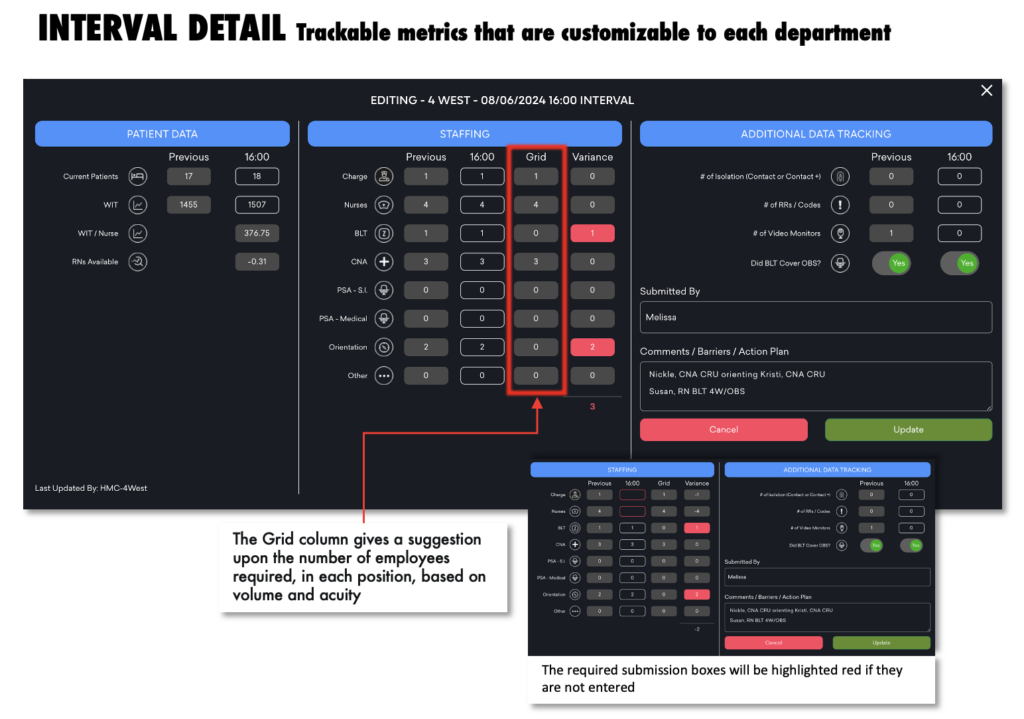
but with a clear, shared view of:
- current census and acuity
- staffing by role
- expected need for the next interval
Now the decision changes.
Not:
“What might happen?”
But:
“What is happening—and what does it require right now?”
The charge nurse adjusts.
The staffing office sees it.
Another unit offers support.
The decision is visible.
And understood.
Why This Matters
This isn’t about perfect decisions.
It’s about consistent ones.
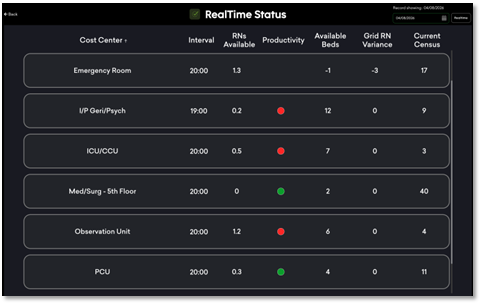
When leaders are working from the same view:
Variation decreases.
Communication improves.
And performance stabilizes.
What You’re Seeing in the Screens
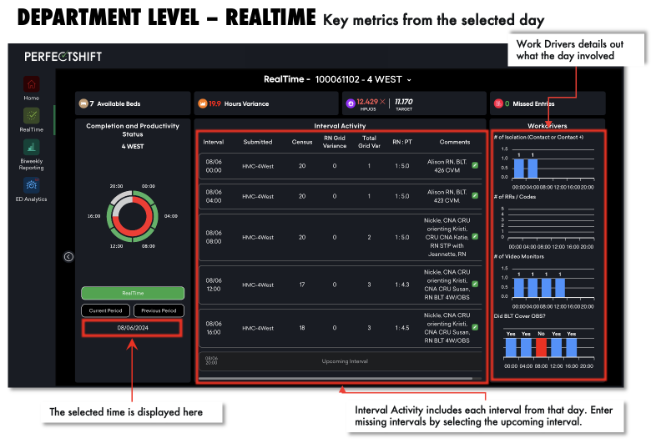
The screens shown here reflect that shared view.
Not a report after the fact.
A working view during the day.
Where:
- staffing gaps are visible
- decisions are documented
- activity is tracked in intervals—not at the end of a shift
This is not about monitoring.
It’s about managing.
What We Do
We implement software—but that’s not what changes performance.
What changes performance is how leaders use information during the day.
RealTime makes that possible by:
- giving leaders a shared view
- structuring decisions in intervals
- creating visibility across units
So decisions aren’t made in isolation.
And they aren’t reviewed after the fact.
Where Financial Performance Fits
Real-time decisions only matter if they hold up financially.
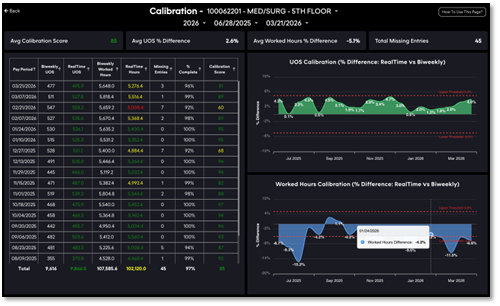
At the end of the pay period, results are reflected in financial reporting.
That’s where many organizations discover the gap:
What they thought was happening during the day
doesn’t fully align with what actually occurred.
That gap matters.
Because it reveals whether decisions made in real time are accurate, consistent, and sustainable.
When leaders can connect what they did during the shift to what shows up financially:
They learn faster.
They adjust sooner.
And their decisions become more reliable over time.
Real-time management is not separate from financial performance.
It’s what drives it.
If real-time decisions don’t align with financial outcomes, the system breaks down. When they do, performance becomes predictable.
What This Creates
When this becomes the way a hospital operates:
Leaders are more confident.
Teams are more aligned.
Decisions are more consistent.
And performance follows.
Not because of a mandate.
Because of how the work is managed.
The Real Difference
Most systems help you understand what happened.
This helps you influence what happens next.
If your leaders are still looking back to understand performance—
it’s worth asking:
What would change if they could act in time?