
Stop Managing Timekeeping After the Fact
They have a timing problem.
Missed breaks.
Overtime exceptions.
Compliance risk.
None of it is hidden.
It’s just seen too late.
By the time leaders review what happened—
the shift is over,
the pay period is closing,
and the opportunity to do anything about it is gone.
So the work becomes explanation instead of improvement.

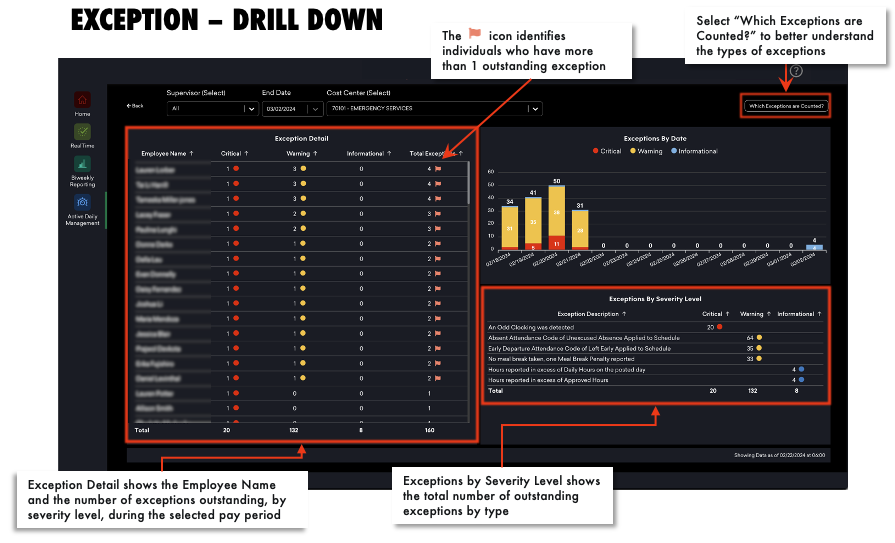
What Actually Happens During the Day
In many organizations, timekeeping is still managed in fragments.
A supervisor notices an issue.
A manager reviews it later.
Finance reports on it at the end of the pay period.
There is no single, shared view of what’s happening as it unfolds.
So decisions default to instinct:
“Let’s just approve it.”
“We’ll deal with it later.”
“It’s probably fine.”
Until it isn’t.
What Changes When Timing Changes
The consequences of getting this wrong are no longer theoretical.
Healthcare organizations have faced significant legal and financial exposure for failing to manage timekeeping effectively:
- Missed meal breaks leading to class-action lawsuits
- Improper rounding practices resulting in large settlements
- Overtime violations creating ongoing compliance risk
These aren’t edge cases.
They are the result of managing after the fact.
Why This Matters More Than Ever
When leaders can see timekeeping exceptions as they develop—
not days later, but throughout the day—
behavior changes.
Conversations change.
Decisions change.
Accountability becomes immediate instead of retrospective.
Instead of asking:
“What happened?”
Leaders begin asking:
“What should we do right now?”
That shift matters.
Because timekeeping exceptions are not just administrative issues.
They are signals:
- of how staffing is being managed
- of how teams are communicating
- of where risk is building
When those signals are acted on in time, outcomes change.
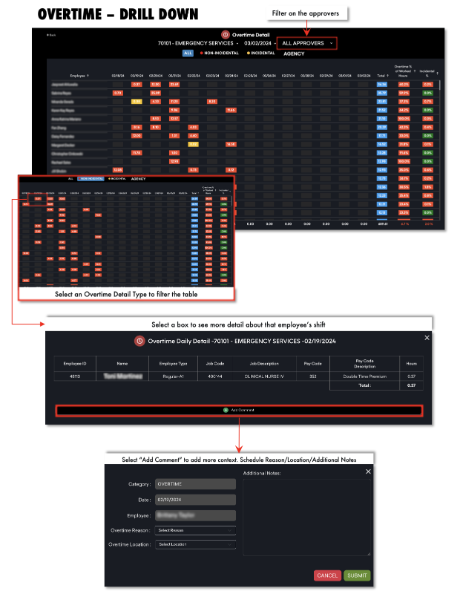
What We Do Differently
We implement software—but that’s not what changes performance.
What changes performance is how information is used.
Active Daily Management ensures that timekeeping data is:
Seen clearly during the day
Understood in context
Acted on while it still matters
Not reviewed at the end of the pay period.
Not explained after the fact.
Used.
A Real Constraint Most Systems Can’t Handle
One of our clients operates a timekeeping system across dozens of servers.
It works—until you ask it to do too much.
If leaders tried to query it continuously throughout the day, it would fail.
So they didn’t.
They waited.
We changed that by delivering structured updates multiple times a day—
not to create more data,
but to make action possible.
This Is Not About Timekeeping
It’s about how leaders lead.
When decisions are made in time:
Risk decreases.
Trust improves.
Performance stabilizes.
When they’re not:
The organization drifts—
and pays for it later.
If you’re still reviewing timekeeping after the fact—
you’re not managing it.
You’re documenting it.